Seminar for Arabian Studies
Seminar 2008
The 2008 Seminar for Arabian Studies will be held at the
British Museum
in London from Thursday 24th - Saturday 26th July 2007.
This is supported by the
MBI Al Jaber Foundation
.
Visit their website at:
www.mbifoundation.com
and read details about their sponsorship at
http://www.mbifoundation.com/mbi-foundation-projects/seminar-for-arabian-studies.html

THE SEMINAR FOR ARABIAN STUDIES
- * DRAFT PROGRAMME *
24-26 July 2008
All lectures will be held in the
Clore Centre
within the British Museum
, Great Russell Street, London, WC1B 3DG
To download this draft programme in Acrobat pdf format, please
To read the abstracts for the papers
Click here
THURSDAY 24 JULY 2008
09:00 - 9:45 Initial Registration
09:45 Welcome
Early Prehistory
09:55 HDOR 419 site: Early to Mid-Holocene occupations in Wadi Washah (Hadramawt, Yemen), Remy CRASSARD (Leverhulme Centre for Human Evolutionary Studies, University of Cambridge, U.K.), Hussein AL-AIDARUS (GOAM, Say'un, Yemen), Khalid AL-HAJ (GOAM, Say'un, Yemen), Gaëlle BRULEY-CHABOT (INRAP, Pantin, France), Vanessa LÉA (CNRS, Toulouse, France) & Céline THIÉBAUT (CNRS, Aix-en-Provence, France).
10:20 The Neolithic period in Arabia the view from the lithic technology, Heiko KALLWEIT (Freiburg, Germany)
10:45-11:15 COFFEE
Archaeology and Environment
11:15 Towards a history of date palm (Phoenix dactylifera) cultivation: integrating morphometric and genetic analyses of modern varieties, Claire NEWTON (Department of Archaeology, University of Nottingham, U.K.), Norbert BILLOTTE (Développement et Amélioration des Plantes, équipe 'Génome et Sélection', CIRAD, Montpellier, France), Sarah IVORRA (Centre de Bio-Archéologie et d'Écologie - Cnrs/Université Montpellier II/EPHE, Institut de Botanique, Montpellier, France), Michel FERRY (PHOENIX Research Station on the Date palm and on Oasis Agriculture, Elche, Spain) & Jean-Frédéric TERRAL (Centre de Bio-Archéologie et d'Écologie - Cnrs/Université Montpellier II/EPHE, Institut de Botanique, Montpellier, France).
11:40 Prehistoric Camels in South-Eastern Arabia: the Discovery of a New Site in Abu Dhabis Western Region, United Arab Emirates. Mark BEECH (Historic Environment Department, Abu Dhabi Authority for Culture and Heritage, U.A.E.).
12:05 Early Arabian Pastoralism at Manayzah in Wadi Sana, Hadramawt, Louise MARTIN (Institute of Archaeology - UCL), Joy MCCORRISTON (Department of Anthropology, Ohio State University, U.S.A.) & Remy CRASSARD (Leverhulme Centre for Human Evolutionary Studies, University of Cambridge, U.K.).
12:30-13:35 LUNCH
Archaeology in Eastern Arabia
13:35 Archaeological investigations in Shenah, Oman, Mohammed A. AL-BELUSHI & Ali Tigani ELMAHI (Department of Archaeology, Sultan Qaboos University, Sultanate of Oman).
14:00 Space Syntax at the Early Bronze Age sites of HD-6 and RJ-2 (Jaalan, Sultanate of Oman), Valentina AZZARÀ (CNRS UMR 7041, Paris, France).
14:25 The Early Bronze Age at Kalba (Sharjah, United Arab Emirates), Daniel EDDISFORD (Institute of Archaeology, UCL, U.K.).
14:50 Wadi Hilo (Sharjah, UAE) a new Bronze Age mining and melting site in SE Arabia, Johannes KUTTERER (Instititut für Ur- und Frühgeschichte und Archäologie des Mittelalters, University of Tübingen, Germany) & Sabah A. JASIM (Directorate of Antiquities, Department of Culture and Information, Government of Sharjah, U.A.E.)..
15:15-15:45 TEA
Archaeology in Eastern Arabia
15:45 A Bronze Age Settlement at Al-Khidr, Failaka Island, State of Kuwait, Lucie BENEDIKOVÁ & Petr BARTA (Institute of Archaeology, Nitra, Slovak Republic).
16:10 The First Season of Kuwaiti-Polish excavations in As-Sabiyah, Lukasz WOJNAROWICZ (Poland).
16:35 Excavations at Umm al-Maa, Qatar, Jürgen SCHREIBER (Qatar Museums Authority, Doha, Qatar).
18.30
SPECIAL LECTURE
MBI Al Jaber Lecture
Cartography and Cantatas: Arabia and the European Enlightenment
Professor D.T. Potts, University of Sydney
This lecture forms part of the British Museums public programme and is free.
FRIDAY 25 JULY 2008
Archaeology in Eastern Arabia
09:30 Excavations at the Iron Age site of Salut by the Italian Archaeological Mission to Oman, Carl PHILLIPS (CNRS UMR 7041, Paris, France).
09:55 The Iron Age ceramic tradition in the Gulf: a re-evaluation from the Omani perspective, Marco IAMONI (Verona, Italy).
10:20 Southeast Arabian pottery at ed-Dur (Umm al-Qaiwain, U.A.E): its origin, distribution, and role in the local economy, Katrin RUTTEN (Département d'Assyriologie et Archéologie, de l'Asie Antérieure, Université de Liège, Belgium).
10:45-11:15 COFFEE
Archaeological Science
11:15 The Provenance Postulate in Archaeological Softstone Analysis. Results from Arabian and Iranian Analysis, Peter MAGEE (Department of Archaeology, Bryn Mawr College, U.S.A.), Don BARBER (Department of Geology, Bryn Mawr College, U.S.A.) & Z. RUGE.
11:40 The function of ceramic jar Type 4100: Performance characteristics, archaeological and inscriptional evidence, and organic residue analyses, Alexandra PORTER (Middle East Department, British Museum), Brendan DERHAM (Department of Archaeology, University of Glasgow, Scotland) & Rebecca STACEY (Conservation, Documentation and Science Department, British Museum).
12:05 Lead isotope analyses of Bronze Age copper-base artefacts from Al-Midamman, Yemen: Towards the identification of an indigenous South Arabian metal production and exchange system, Lloyd WEEKS (University of Nottingham, U.K.), E. KEALL, S. STOCK, J. EVANS & V. PASHLEY.
12:30-13:35 LUNCH
Ancient South Arabia
13:35 Les monolithes dans larchitecture monumentale de lArabie du Sud Antique, Christian DARLES (Laboratoire MHA-APB de l'Ecole Nationale Supérieure d'Architecture de Toulouse, France).
14:00 Excavations in the Sacred Area of Baraqish (Yemen), Alessandro DE MAIGRET (Department of Asiatic Studies, University of Naples, Italy).
14:25 The 2008 field season at Awam Temple: Restoration and excavation work, Zaydoon ZAID (American Foundation for the Study of Man, U.S.A.).
14:50 Fieldwork in Zafar, Capital of Himyar (Yemen), Paul YULE (Seminar für Sprachen und Kulturen des Vorderen Orients, University of Heidelberg, Germany).
15:15-15:45 TEA
Ancient South Arabia
15:45 Barrages in the Western Mountains of Yemen: A Himyarite Model of Water Management, Julien CHARBONNIER (Archéologies et Sciences de l'Antiquité, Université de Paris I - Panthéon Sorbonne, Nanterre Cedex, France).
16:10 Sabaean animal economy at Yala ad-Durayb, eastern Yemen lowlands, Francesco FEDELE (University of Naples, Italy).
16:35 The status of sacred pastures according to Sabaic inscriptions, Sergei A. FRANTSOUZOFF (Institute of Oriental Studies of the Russian Academy of Sciences (St Petersburg Branch), St Petersburg, Russia).
18:00 RECEPTION
Clore Centre, The British Museum
SATURDAY 26 JULY 2008
Ancient South Arabia
09:30 Illness and healing in ancient Yemen: A study of the epigraphic evidence from the Awam Temple/Mahram Bilqis, near Marib in the light of the recently discovered Sabaean inscriptions by the AFSM, Mohammed MARAQTEN (American Foundation for the Study of Man, U.S.A.).
09:55 Stela CIH 611=BM 102600 in the British Museum, Giovanni MAZZINI (Department of Science, University of Pisa, Italy) & Alexandra PORTER (Middle East Department, British Museum).
10:20 The Ancient South Arabian minuscule inscriptions on wood - state of research, Peter STEIN (Lehrstuhl für Semitische Philologie und Islamwissenschaft, Friedrich-Schiller-Universität, Jena, Germany).
10:45-11:15 COFFEE
Ancient and Islamic Arabia
11:15 People of powerful South Arabian kings or just people like others, Manfred KROPP (Collège de France).
11:40 A parallel to the Second Commandment revisited, Anne MULTHOFF (Lehrstuhl für Semitische Philologie und Islamwissenschaft, Jena, Germany).
12:05 The Maritime Silk Route Project: Reconstructing an Early Ninth-Century AD Shipwreck, Eric STAPLES & Tom VOSMER (Maritime Archaeology Consultant, Office of the Adviser to His Majesty for Cultural Affairs, Muscat, Sultanate of Oman).
12:30-13.35 LUNCH
Islamic Arabia
13:35 Territory and Settlement Patters during the Abbasid Period: the village of Murwab (Qatar), Alexandrine GUÉRIN (Maison de l'Orient et de la mediterranee, France).
14:00 The struggle for Oman: the Second Ibadi Imamate and the Wajihid, Abdulrahman AL-SALIMI (Bidiya, Sultanate of Oman).
14:25 The Battle of Julfar (1475 A.D.), Valeria PIACENTINI (Facoltà di Scienze Politiche, Università Cattolica del Sacro Cuore, Milan, Italy) & Christian VELDE (National Museum of Ras Al-Khaimah, U.A.E.).
14:50 Islamic Urbanism in Eastern Arabia, Andrew PETERSEN (Department of Archaeology and Anthropology, University of Wales, Lampeter, Wales).
15:15-15:45 TEA
Islamic Arabia
15:45 Water and sign magic in al-Jabin, Yemen, Ingrid HEHMEYER (Department of History, Ryerson University, Canada).
16:10
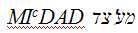 (bracelet): Jewish Art or Islamic Art?, Ora BERGER (Department of Art History, Hebrew University of Jerusalem, Israel).
16:35 Yemen: Religion, Magic and Jews , Bat-Zion Eraqi KLORMAN (Department of History, The Open University of Israel, Raanana, Israel).
POSTERS
Techno-functional analysis of the bone tools unearthed at the fishing settlement of KHB-1, from the beginning of the IV millennium BC (Ra's al-Khabbah, Ja'lan region, Sultanate of Oman),
Fabio CAVULLI and E. CRISTIANI (Laboratorio di Preistoria 'B. Bagolini', Dipartimento di Filosofia, Storia e Beni Culturali, Università degli Studi di Trento, Corso Trento, Italy) &
Simona SCARUFFI (Dipartimento di Archeologia, University of Bologna, Italy).
© Seminar for Arabian Studies 2008.
Website design by
markbeech.com
Go to
Top

About us
Committee
Contact
(pdf - 472 Kb)
Index PSAS vols.1-36
Links
Proceedings
Seminar 2002
Seminar 2003
Seminar 2004
Seminar 2005
Seminar 2006
Seminar 2007
Seminar 2008
What's new?
email SAS
page last updated:
25 April
2008